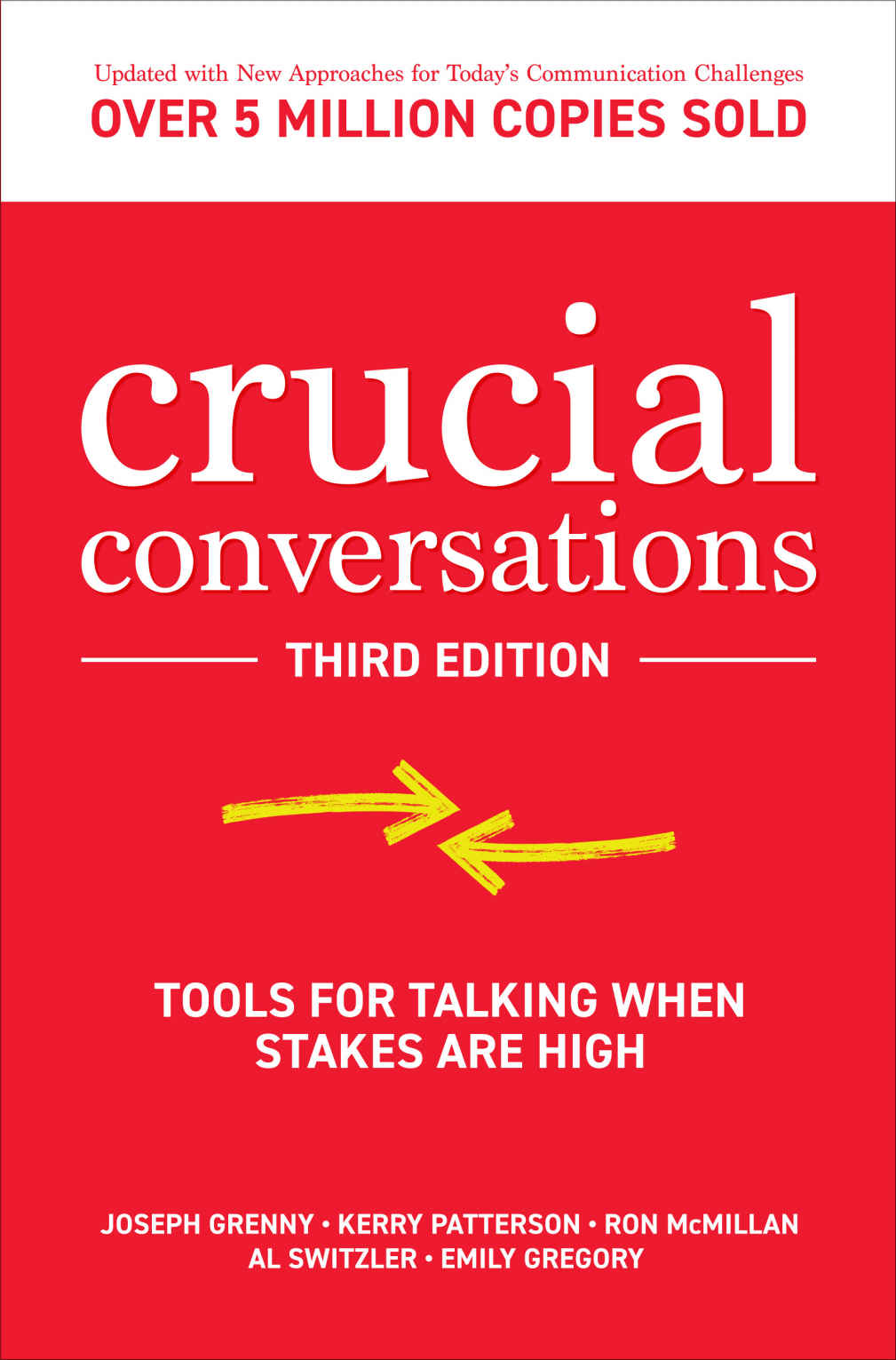
Highlights
- High-stakes talk has a learnable structure — the book's core claim is that difficult conversations are not a matter of charisma or luck but of repeatable moves that anyone can practice, which is structure-beats-magic applied to the most improvised-feeling activity there is.
- The pool of shared meaning — dialogue works when every party's information flows into one common pool before decisions are made; this is a second-brain principle in miniature: shared context, made explicit, is what makes good conclusions possible.
- Separate facts from the stories we tell about them — the authors insist you start from observable data and only then layer interpretation; the same data-versus-narrative discipline that keeps a knowledge vault (and a data model) trustworthy.
- Watch conditions, not just content — noticing when safety breaks down (silence or aggression) is monitoring the conversation's meta-signals; a rules-like control loop running alongside the payload, exactly the pattern of checks running alongside pipelines.
- Make yourself the first system to inspect — the "start with heart" move turns attention inward before blaming others, the same self-auditing reflex a compounding knowledge system depends on.
- A conversation isn't finished until decisions and actions are recorded — the closing discipline (who does what by when, documented) is the decision-record habit; without the written artifact, the crucial conversation evaporates.
Highlights on this page are generated with the help of AI.