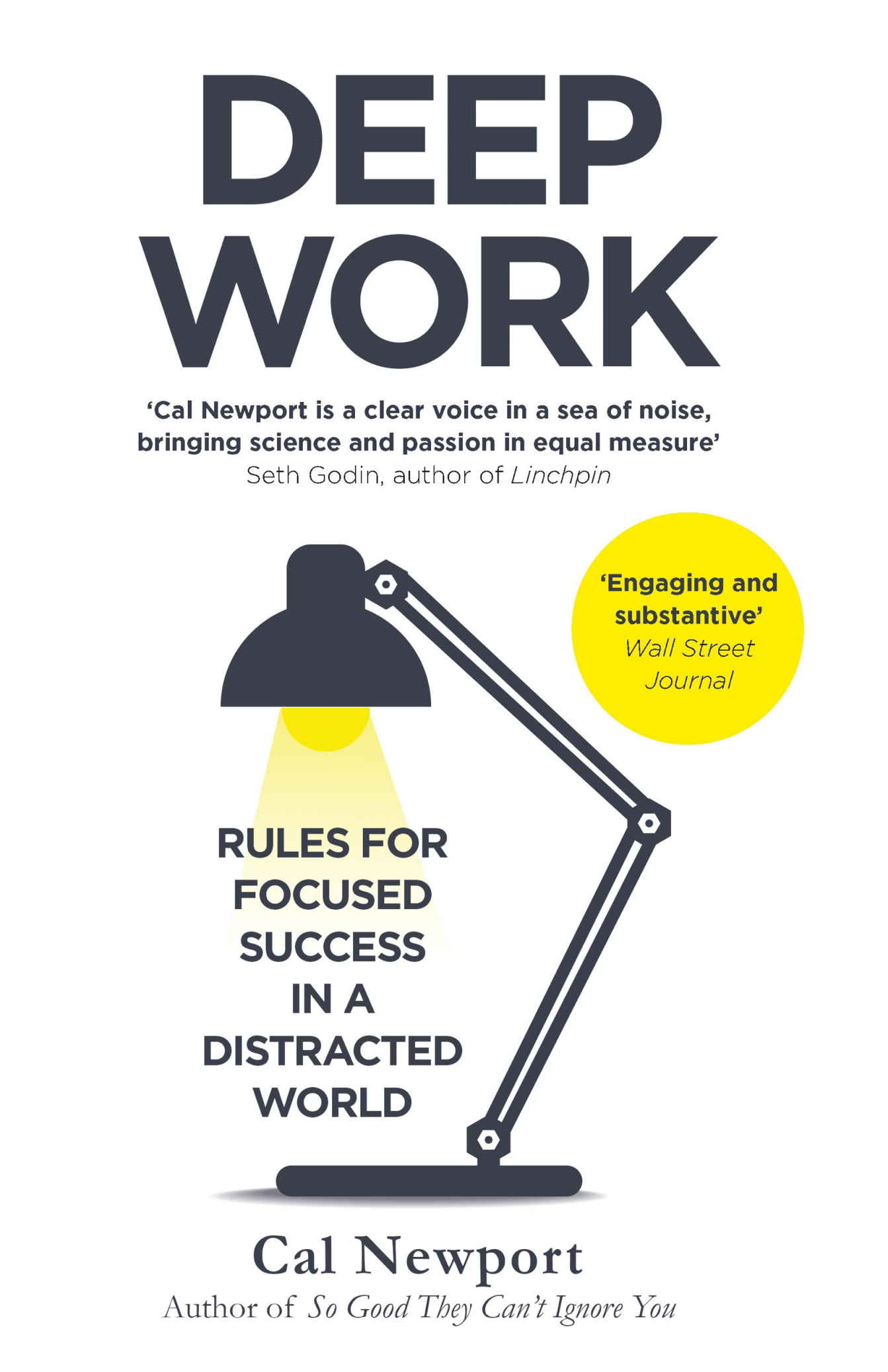
Highlights
- Depth is produced by rituals, not summoned by willpower — Newport's core mechanism is that focus emerges from designed routines (fixed times, places, rules for a session); the productivity-domain proof of structure beats magic.
- The title says "rules" for a reason — the book's second half is literally a rule set (work deeply, embrace boredom, quit social media, drain the shallows); personal effectiveness framed as an explicit, auditable rules layer rather than inspiration.
- Attention residue makes context-switching a hidden tax — every switch leaves cognitive residue that degrades the next block; the case for batch-oriented deep sessions is the same case as designing systems so work arrives pre-structured instead of as interrupts.
- Deep work compounds into rare-and-valuable skill — the economic argument (deep skills are scarce, hence premium-priced) underwrites any season of focused investment: build a coherent body of work rather than fragmenting into billable shallowness.
- Schedule every minute, then revise without guilt — time-block planning treats the calendar as a model of the day that gets updated as reality diverges; a daily-scale version of model-first, with the calendar-as-spine practice as its knowledge-vault twin.
- Shallow work must be budgeted, not banned — Newport's move is to quantify and cap the shallow, not pretend it disappears; the same governance instinct as measuring data quality before remediating it.
Highlights on this page are generated with the help of AI.