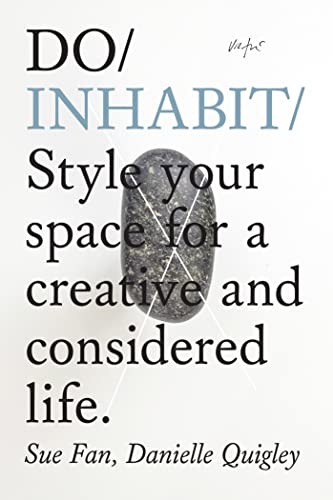
Highlights
- Your environment is a system you design, not a backdrop you receive — the book's core claim is that a space shapes mood, energy and behavior whether you curate it or not, so you should shape it deliberately. That is Structure Beats Magic applied to physical space: the room is already running rules on you; the only question is whether you wrote them.
- Considered beats accumulated — Fan and Quigley argue for bringing things into your home intentionally rather than letting stuff pile up by default. It's the validate-don't-guess move for objects: every item earns its place against an explicit criterion instead of surviving by inertia.
- Small, repeatable interventions outperform one big makeover — the book favors modest adjustments (light, plants, arrangement, sensory details) over dramatic renovation. Pattern density in miniature: a handful of reusable moves, applied consistently, generate a coherent whole the way a small set of modeling patterns generates a large warehouse.
- A home should express how you actually live, not a showroom ideal — the authors push readers to start from their real routines and needs, then style around them. That's business-friendly modeling for living space: model the domain as it is, and the structure that follows stays usable long after the trend it ignored has churned.
- Inhabiting is an ongoing practice, not a project with an end date — the book frames tending your space as a continuous loop of noticing, adjusting and pruning. The same compounding-brain reflex behind a second brain: the system stays alive because maintenance is built into how you use it, not bolted on afterward.
- Rooms work when each area has a clear purpose — a recurring idea is zoning: giving corners and surfaces defined roles so the space supports specific activities. Atomic, self-contained units at architectural scale — every zone a folder-per-unit with one job, which is exactly why the whole stays navigable.
Highlights on this page are generated with the help of AI.