Why this is in my collection
From the publisher:
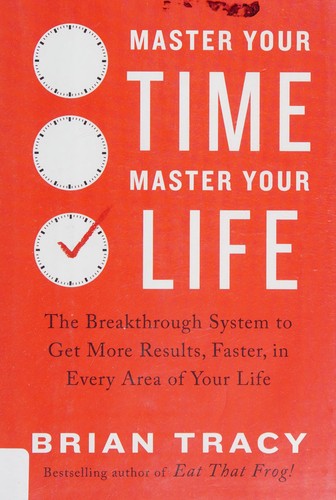
This life-changing book from the bestselling author of Eat That Frog! revolutionizes the term "life balance" to uncover a unique program for determining WHAT to do WHEN, and managing all the many details of your life International speaker, business consultant, productivity expert, and bestselling author Brian Tracy is a go-to authority on how to stay on top of work and your personal life -- while maintaining a strong and healthy balance between the two. In The Right Timing , Tracy explains why tackling the right project at the right time is of the utmost importance. Based on the most recent
Highlights
- Time comes in distinct types, not one undifferentiated stream — Tracy's central move is a typology (strategic time, productive time, creative time, income-earning time, rest, and more), each with its own rules for use; classifying before acting is the structure-beats-magic reflex applied to the calendar.
- The right task at the right time beats raw effort — matching the kind of work to the kind of hour matters more than working longer; a scheduling rule, not a willpower trick, which is why it can be systematized instead of re-decided daily.
- Deep, creative work needs protected uninterrupted blocks — strategic thinking and problem-solving time cannot be sliced thin; the same insight that makes flagship-article days and modeling sessions calendar-level commitments rather than gaps between meetings.
- Clarity about highest-value activities is the multiplier — Tracy keeps returning to identifying the few tasks that produce most of the results; in a portfolio practice that is the curation question: score what deserves attention before spending any.
- Planning time repays itself many times over — minutes spent deciding what to do save hours of doing the wrong thing; the productivity-book phrasing of a conviction that holds for data platforms too — investment in the model up front collapses effort downstream.
- Rest and recovery are a category of time, not a failure of it — treating renewal as a planned type rather than leftover slack is what makes a sustainable long-game system, career breaks included.
Highlights on this page are generated with the help of AI.