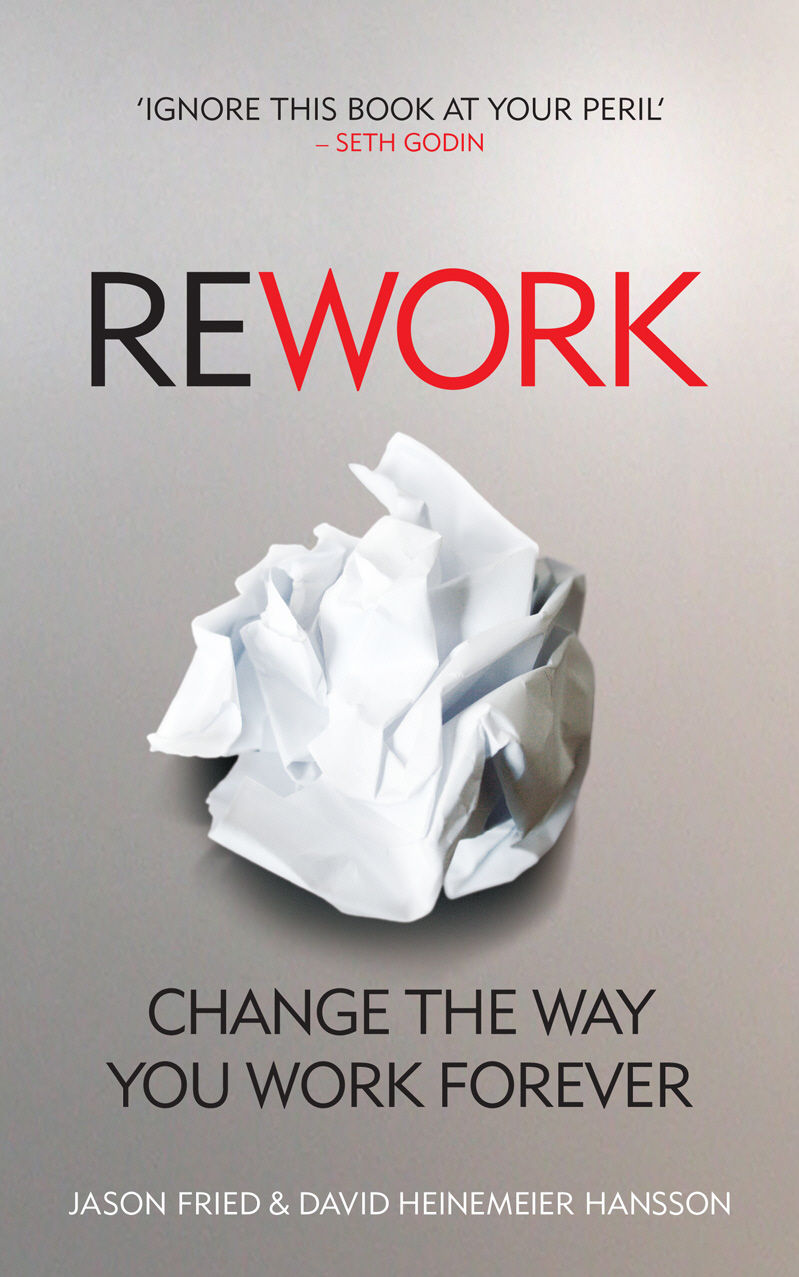
Highlights
- Embrace constraints as design fuel — Fried and DHH argue that limited time, money, and people force clarity that abundance never does; a one-person firm with a sharp thesis is a constraint-shaped business on purpose, not a scaled-down big one.
- Sell your by-products — every piece of work throws off secondary artifacts worth shipping; the work-to-docs reflex is this idea industrialized — engagements produce articles, articles produce concepts, and the knowledge system is the by-product factory.
- Start at the epicenter — build the one thing the offering cannot exist without and defer everything else; for a positioning exercise this is the distillation discipline: find the load-bearing claim (the model, if it's right, generates the pipeline) and build outward from it.
- Planning is guessing — long-range plans harden guesses into commitments; the honest alternative is deciding at the last responsible moment with real information, which is why intentions-over-goals works better than five-year roadmaps.
- Half a product, not a half-assed product — cutting scope beats cutting quality; the same trade every curated system makes when it scores sources and keeps fewer, better units instead of hoarding everything at mediocre depth.
- Workaholism is a bug, not a badge — grinding longer substitutes effort for thought; the anti-heroics stance that pairs naturally with automating the repetitive layer so the scarce hours go to judgment.
- Out-teach the competition — teaching what you know builds an audience that advertising can't buy; the entire publish-the-thinking strategy (a substantial body of articles, a concept library in public) is this bullet as a business model.
Highlights on this page are generated with the help of AI.