Highlights
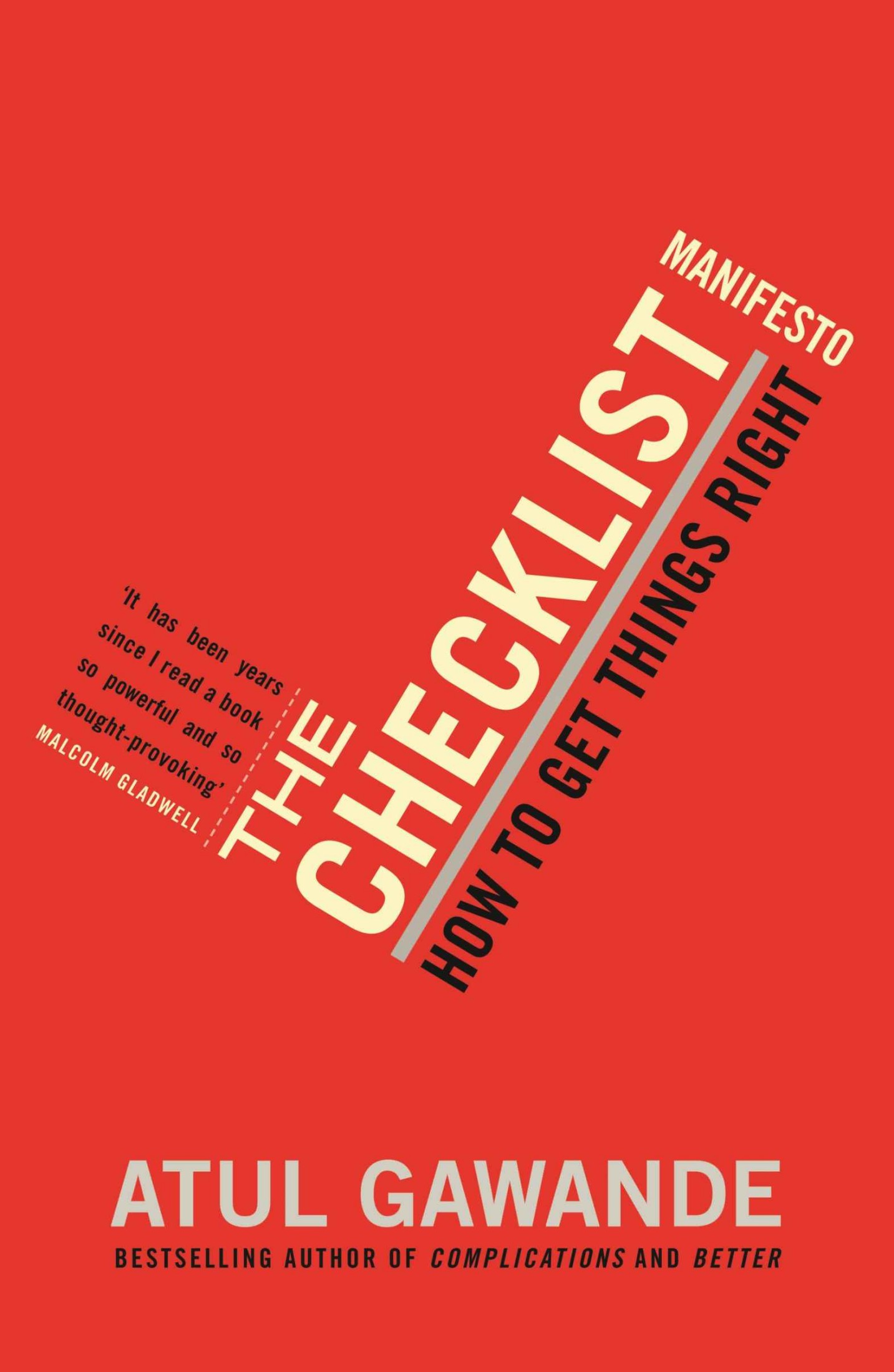
- Failure of ineptitude, not ignorance — Gawande's surgeons and pilots fail by not applying knowledge they already have, not by lacking it; expertise alone does not execute reliably, which is the empirical heart of structure-beats-magic.
- A checklist is knowledge compiled into an executable rule — hard-won expertise reduced to a few verifiable steps that run the same way every time; the analog form of rules-as-third-pillar, and of data-quality checks that fire on every load rather than living in someone's head.
- DO-CONFIRM versus READ-DO — two distinct execution modes: act then verify, or follow step by step; the same lane split as auto-apply changes versus human-gated approvals in a review workflow — choosing the mode is part of designing the rule.
- Good checklists are designed artifacts, brutally short — pause points, five to nine items, field-tested wording; an exhaustive checklist is a failed one, just as a rule catalog nobody can run is documentation, not control.
- Complex work needs coordination checks, not just task checks — the construction-industry chapters show checklists that force the right people to talk at the right moments; communication itself made checkable, a governance insight disguised as a building-site story.
- Checklists activate teams rather than constrain them — introducing names and briefings before surgery measurably improved outcomes by licensing anyone to speak up; well-designed structure enlarges expert judgment instead of replacing it — the answer to every "process kills craft" objection.
Highlights on this page are generated with the help of AI.