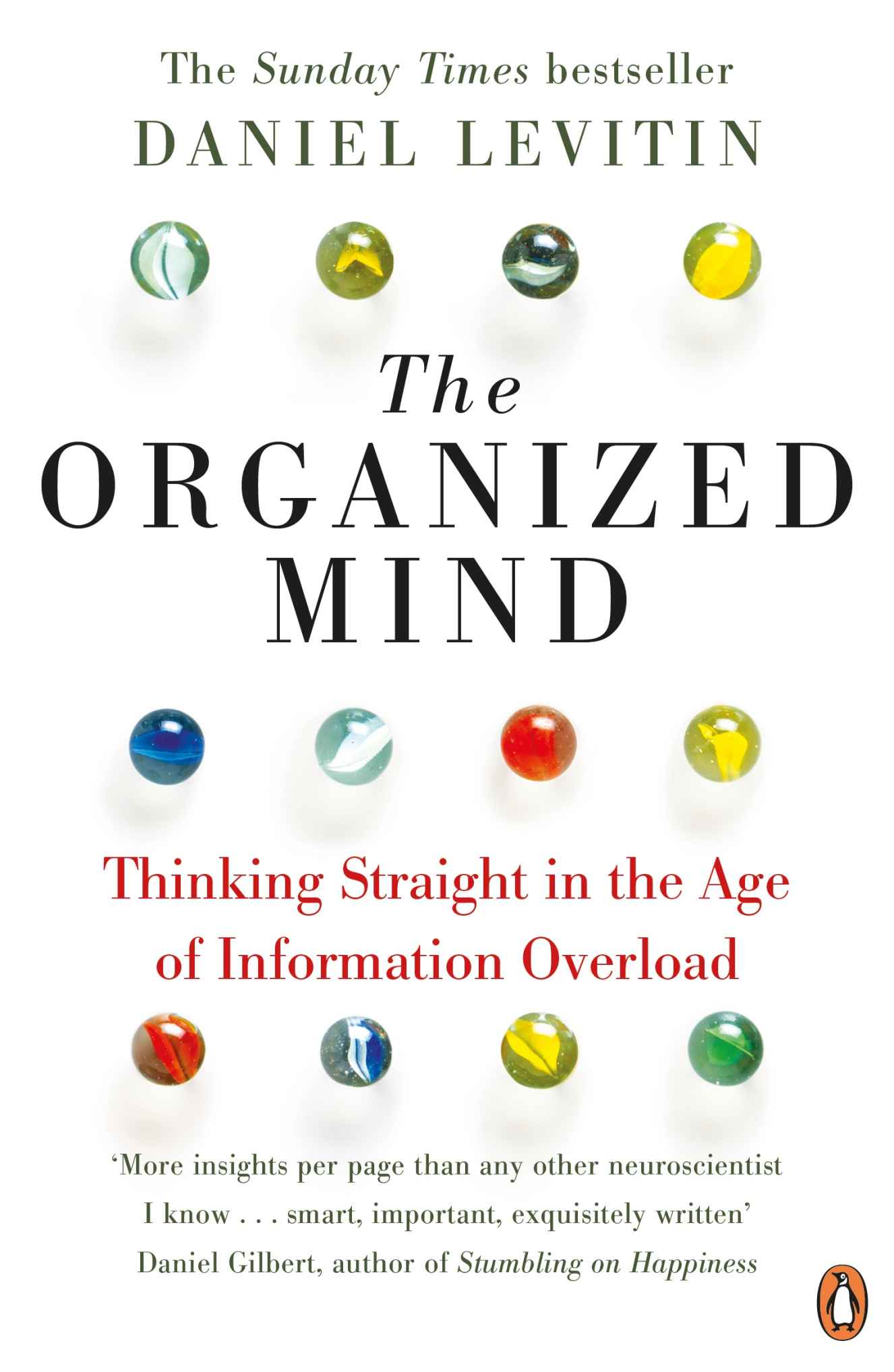
Highlights
- Externalize memory; brains are for thinking — Levitin's neuroscience case is that successful people offload remembering onto external systems because attention and working memory are brutally limited; the scientific foundation under the entire second-brain practice.
- Attention is the scarcest resource — task-switching carries a real metabolic cost and the attentional filter is easily hijacked, which is why an environment of pre-organized information beats one that demands constant micro-decisions about where things are.
- A designated place for everything — the cognitively cheap household rule that every object has exactly one home scales directly to information: the canonical-location principle is what makes both retrieval and automation possible.
- Every category system needs a junk drawer — Levitin defends the miscellaneous bucket as a structural necessity, not a failure; the honest acknowledgment behind inbox folders and unknown-date holding pens in any real filing architecture.
- Satisficing through pre-made decisions — rules decided once (what to keep, where it goes, when to act) spare the daily cognitive spend of re-deciding; rules as automated decisions is precisely the third-pillar claim, here argued from brain chemistry.
- Organization must happen at input time — the moment of capture is when categorizing is cheap and context is rich; defer it and the cost multiplies, the neuroscience version of routing captures to their day-folder immediately.
Highlights on this page are generated with the help of AI.