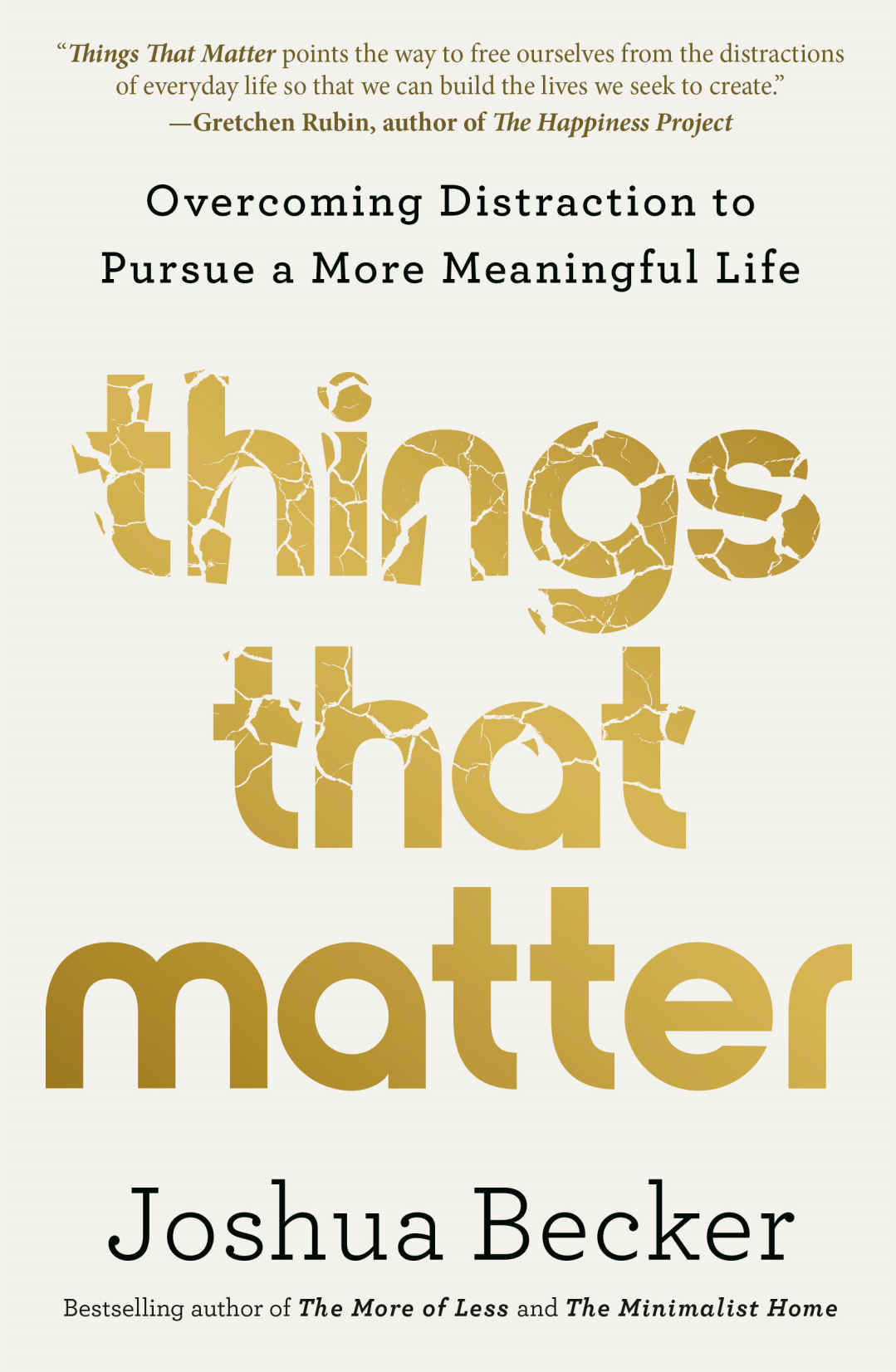
Highlights
- Name the distractions to defeat them — Becker builds a taxonomy of what pulls us off course (fear, past mistakes, possessions, money, applause, leisure, technology); giving the failure modes explicit names is a structural act, the same move as cataloguing anti-patterns instead of vaguely "trying harder".
- Decide what matters first, then organize around it — the book insists purpose precedes decluttering; structure follows intent, the second-brain corollary being that a vault's architecture should serve a chosen life, not archive everything indiscriminately.
- Minimalism is a means, not the end — removing the excess exists to make room for contribution, which reframes any season of deliberate decluttering: selling and shedding is not tidying, it is clearing capacity for the next build.
- Accumulation is the default; curation is deliberate — possessions pile up passively the way files do, and both need an active keep/discard rule; the curated-sources discipline applied to physical life.
- Technology should serve the purpose, never set it — Becker's chapter on digital distraction lands on tools staying subordinate to intent, the same stance as being a tool-extender: the tool amplifies the system, it never becomes the system.
- Legacy is measured in contribution, not inventory — what compounds is what you gave and built for others, not what you stored; a quiet argument that publishing beats hoarding, for garages and for knowledge vaults alike.
Highlights on this page are generated with the help of AI.