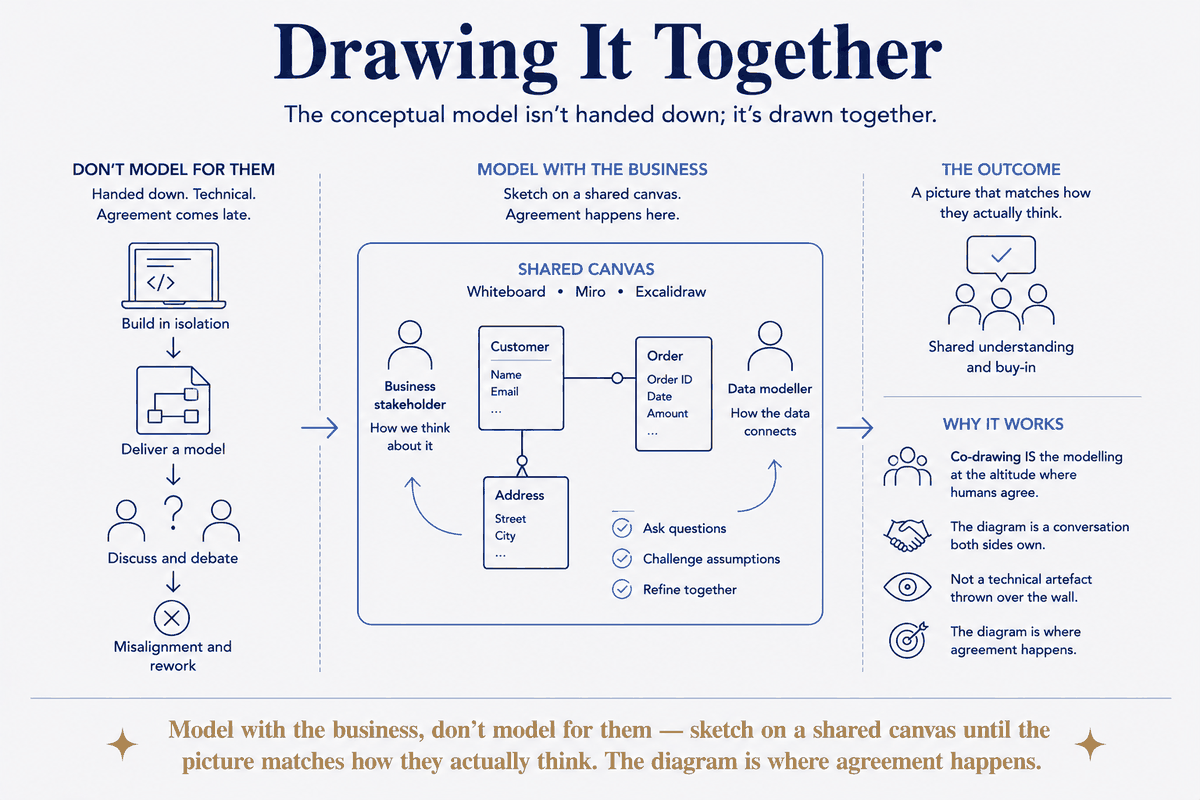
Model with the business, don't model for them — sketch on a shared canvas until the picture matches how they actually think. The diagram is where agreement happens.
🔗 Sister note: a data/modelling framing of this concept lives in the MDDE library (
W:/data/rules/mdde-concepts/drawing-it-together/), published on structureddiagrams.com. Keep both in step when editing.
The conceptual model isn't handed down; it's drawn together. Sitting with a stakeholder who has never read a line of SQL and agreeing what a 'customer' is and how it connects to an 'order' happens by sketching it on a shared surface — a whiteboard, a Miro board, an Excalidraw canvas — until the picture matches how they actually think. That co-drawing IS the modelling at the altitude where humans agree; it's not preparation for the real work, it's where buy-in and shared understanding are made. This is the personal/visual counterpart to MDDE's collaborative data modelling, and it connects to the wider field of visual facilitation — getting a room to a shared picture of a contested idea. The rule: the diagram is a conversation both sides own, never a technical artefact thrown over the wall.