RAG is a technique; grounding is a result. You can run retrieval perfectly and still be ungrounded — relevance is not the same as support.
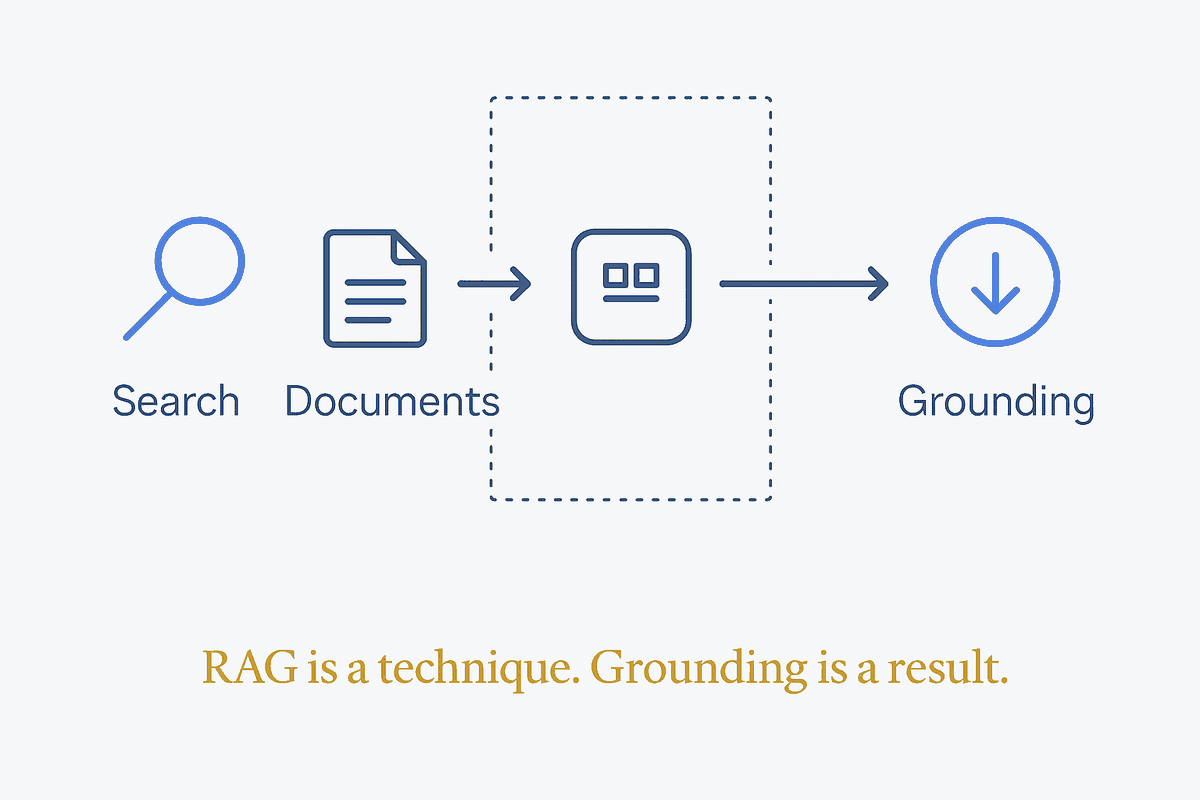
The two words are used interchangeably and they are not the same kind of thing. RAG is a technique: fetch documents, put them in the prompt. Grounding is an outcome: the answer is verifiably tied to a trusted source. Running the technique does not guarantee the outcome, and the gap between them is where most disappointing AI projects live.
The mechanism of the gap is worth stating plainly. Similarity search returns chunks that resemble the question. Resembling the question is not the same as containing the answer, and a chunk can be topically perfect while supporting nothing. Worse, the failure is silent: the model receives plausible-looking context, writes a fluent answer, and nothing in the output marks which sentence came from evidence and which came from the model's own priors. A confidently wrong answer and a correct one arrive in the same shape.
What closes the gap is not better retrieval but an explicit test applied after it. Does each claim trace to a retrieved passage? Is that passage current? Does the answer carry a citation a reader can follow back? These are checks with pass/fail answers, and they are the difference between "the pipeline ran" and "this answer is supported." Systems that take grounding seriously add a step nobody demos: reject weak claims, and say so, rather than smoothing them into prose.
The distinction matters most when the answer lives in a document nobody asked about. Ask about a policy by name and retrieval finds it; ask a question whose answer sits in a different document than the one the question resembles, and similarity quietly fails while confidence stays high. That is the case worth designing for, and it is the case that reveals whether you built a retrieval pipeline or a grounded one.