Knowledge treated as a system, not a pile of notes.
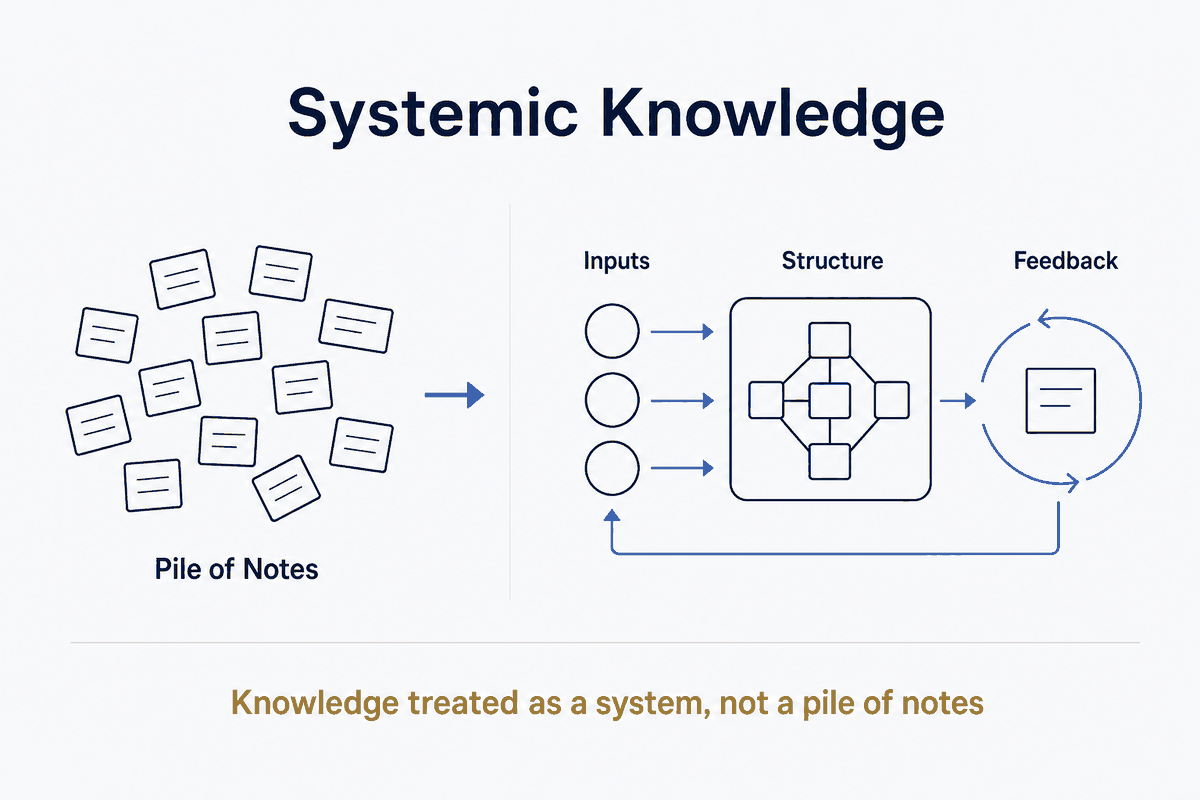
A framing of personal knowledge as a system with inputs, structure and feedback — the whole behaves as one, not as isolated notes.
Most knowledge advice treats notes as the unit: capture better, organise better, review more. But a note is not a system, and a thousand good notes with nothing joining them is still a pile — which is why so many well-kept second brains quietly stop being used. The value was never in the notes; it was in whether they behave as a whole.
Systems have three parts, and the last is the one people skip. Inputs: what you deliberately let in (and what you don't). Structure: the shape that connects the pieces — types, links, rules — so the parts can act on each other. Feedback: what the system learns from use and carries forward. Without feedback you don't have a system, you have storage that happens to be tidy.
Think of it that way and the questions change. Not "where should this note go?" but "what does this change about the whole?" — which is a data-modelling question, and always was.