What it is
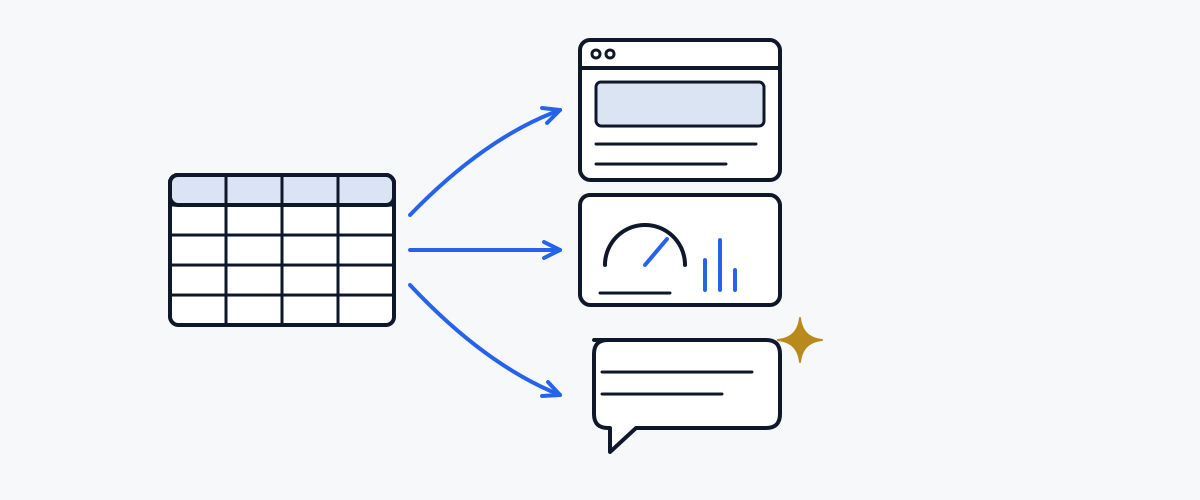
The delivery layer turns structured data into something for a specific reader: a site, a weekly overview, an answer from an assistant, a shared calendar. Each output has one audience and one job, and it is built from the integrated layer, never edited as a source in its own right.
Why it matters
Hand-made outputs drift. A diagram drawn last year, a status page updated by memory, a slide copied from an older slide: each one was true once. A generated output stays as current as its source, and when it is wrong you know where to fix it.
Publishing one way, from source to output, keeps you in control of what leaves the system. The private vault stays private; only what is marked for an audience goes out.
What it looks like
At home. This site is a delivery layer. Concept pages, the glossary, the timeline and the writing pages are all generated from markdown sources. A build gate stops a page from going live when an image is missing or an article still contains working notes.
At work. The same layer is the reporting and data-product side of a platform: governed outputs with an owner, built from the warehouse, with checks that run before release.
The usual mistake
When a number on a dashboard is wrong, the fix belongs in the data or the rule that produced it. Patch the dashboard and the next refresh brings the error back.
Where it stops
Generating every output takes a build step, and a build that breaks blocks everything behind it. For a one-off note to one person, writing it by hand is fine.