The accidental survey
For a few months I saved every decent Claude/AI infographic that crossed my feed — the "50 tips," the "clone yourself in 48 hours," the "3 files that replace 500 prompts." About 120 of them, from a dozen different creators who mostly don't know each other.
Then I did the thing the infographics themselves never do: I read them across each other and asked what they actually agree on.
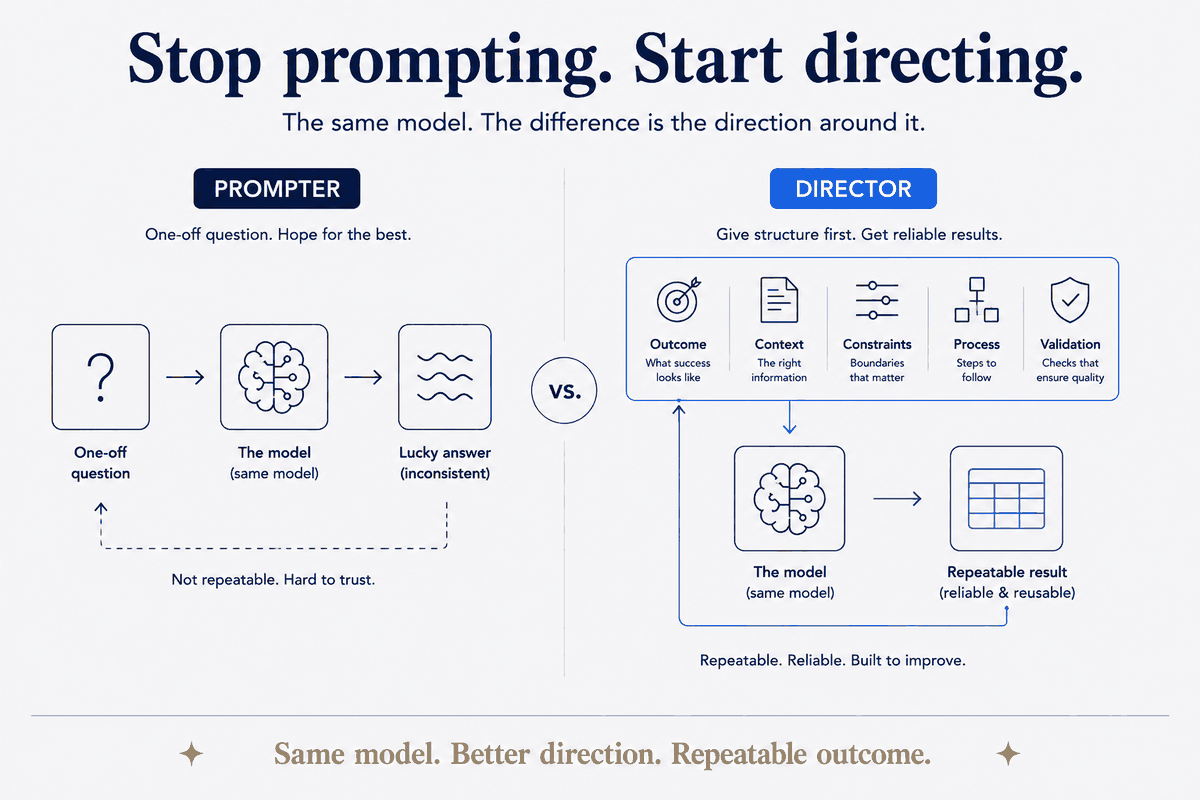
The answer was almost funny. Strip away the hype, the screenshots, and the engagement-bait counts, and nearly every serious one is saying the same sentence in different words:
Stop prompting. Start directing. Set up a system before the task.
That's it. That's the whole genre. "Infrastructure, not prompts." "Configure first." "Most people never leave Level 1." The value isn't a cleverer prompt — it's the structure you put around the model before you ask it anything. Which, if you've read anything else I write, is a sentence I've been saying for a while: structure beats magic. It was strange and a little vindicating to watch the entire creator scene arrive at it independently.
So this isn't another tips list. It's the few things that survive when you read all the tips at once — aimed at one job: making AI genuinely useful on top of your own notes and knowledge.
The shape everyone draws
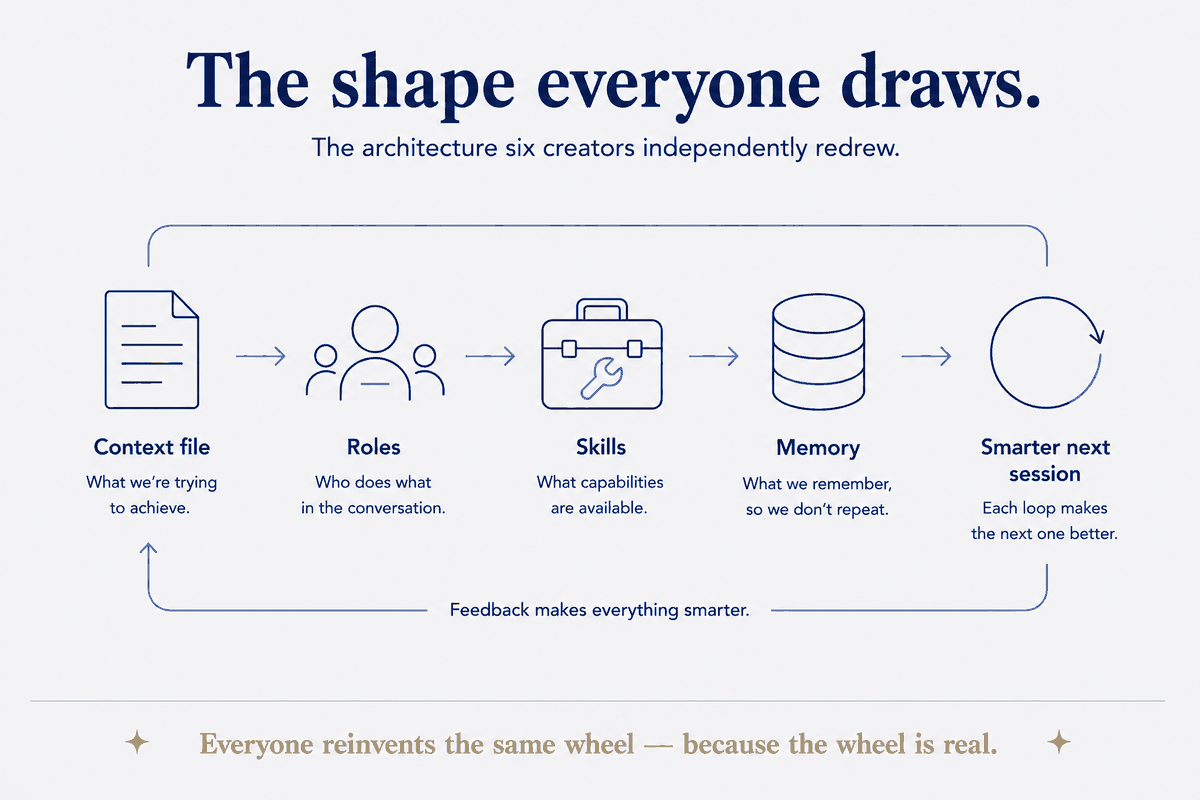
Here's the part that convinced me. Five or six creators, different audiences, all drew the same architecture with different labels:
- A context file — who you are, how you work. (They call it about-me, Context.md, "company brain.")
- Roles — specialised agents for specialised jobs.
- Skills — your repeatable processes, saved as commands.
- Memory — what the system learns and carries forward.
- And the loop that connects them: context → roles → skills → memory → a smarter next session.
When that many people reinvent the same wheel, the wheel is real. And here's the quiet thing none of the posters say out loud: that diagram is a consumer-grade sketch of what a properly structured vault already does. The infographics sell you the MVP. The real version is just… more structure, applied with more discipline.
What actually matters — the durable few
If you want AI to be useful against your own knowledge, these are the moves that survived the cull. They're boring on purpose. Boring is what still works next year.
1. Write one file that tells the AI who you are. Your context, your preferences, how your notes are organised, how you want it to work. It loads every session, so you stop re-explaining yourself. This single file does more than any prompt.
2. Work in a persistent space, not throwaway chats. A project that remembers beats a thread that forgets. A knowledge system needs continuity.
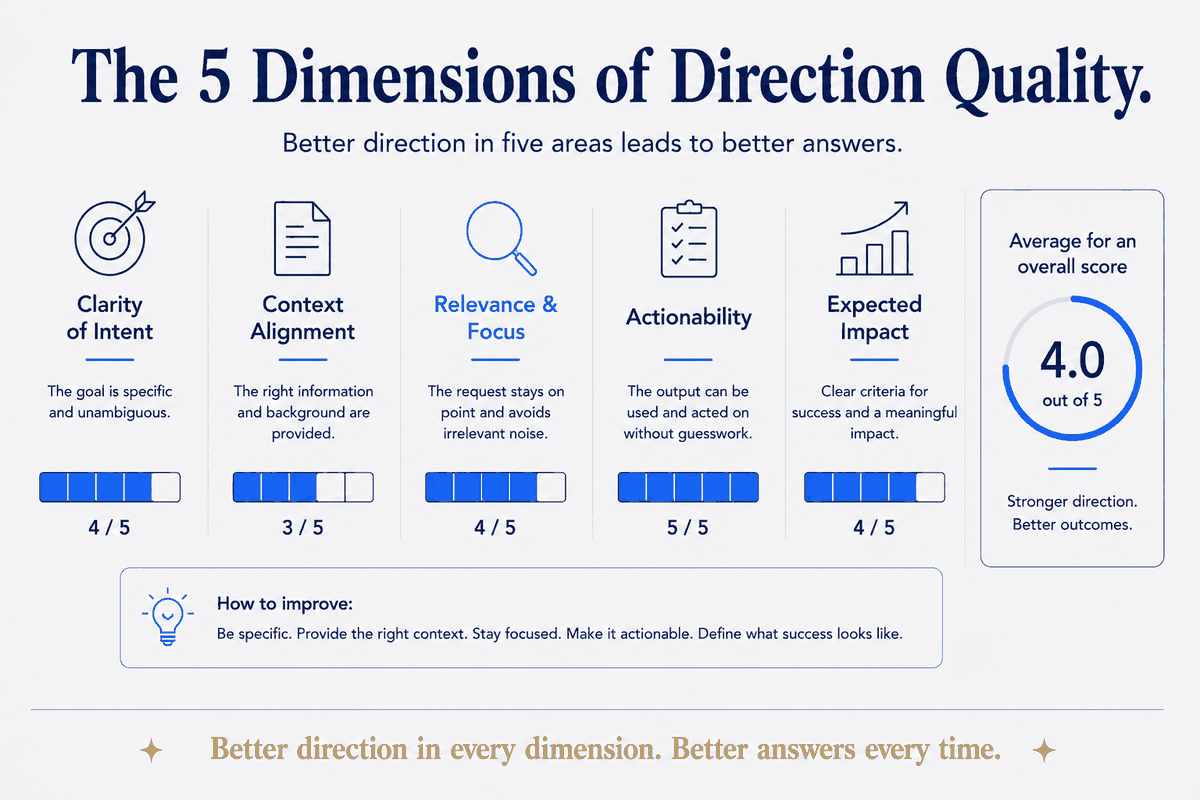
3. Connect it to your actual notes. An assistant that can read your real vault gives grounded answers instead of generic ones — and you keep the data.
4. Add a little structure to every note from the start. A few fields at the top — date, type, tags — are what turn a folder of files into something you can query. Cheap now, painful to retrofit later.
5. Give it your voice, not facts about you. Save real samples of how you actually write. This is what stops your drafts sounding like everyone else's recycled chatbot output.
6. Tell it what you'll never write. A short "anti-style" list — banned words, the clichés you hate — removes the AI tell more reliably than any positive instruction.
7. Turn anything you do twice into a saved skill. Your best process shouldn't live in your head or a forgotten doc. As a command, it runs the same way every time.
8. Make honesty a standing rule. Instruct it to flag uncertainty and never invent sources, numbers, or facts. A confidently-wrong answer is worse than "I don't know" — especially when you'll rely on this later. (It reduces the problem; it doesn't remove it. Still verify anything that matters.)
9. Capture every correction so it compounds. Keep a file of fixes and preferences the AI reads each session. One lesson today carries into the next hundred sessions. This is the difference between a system that improves and one that resets.
10. Pick the right container. Quick one-off → a prompt. Repeated task → a skill. Ongoing context → a project. Knowing which is which is most of the skill.
11. Give it the goal, not the steps — and let it ask you first. State the outcome and let it interview you. The questions surface what you forgot to specify.
12. Don't over-build. This is the honest counterweight. Structure beats magic only when the structure is usable. Collecting tools, files, and "setups" you never run is the opposite of a system. Start with one about-me file and a real task. Add structure when a real need shows up — not before.
The tell that separates signal from noise
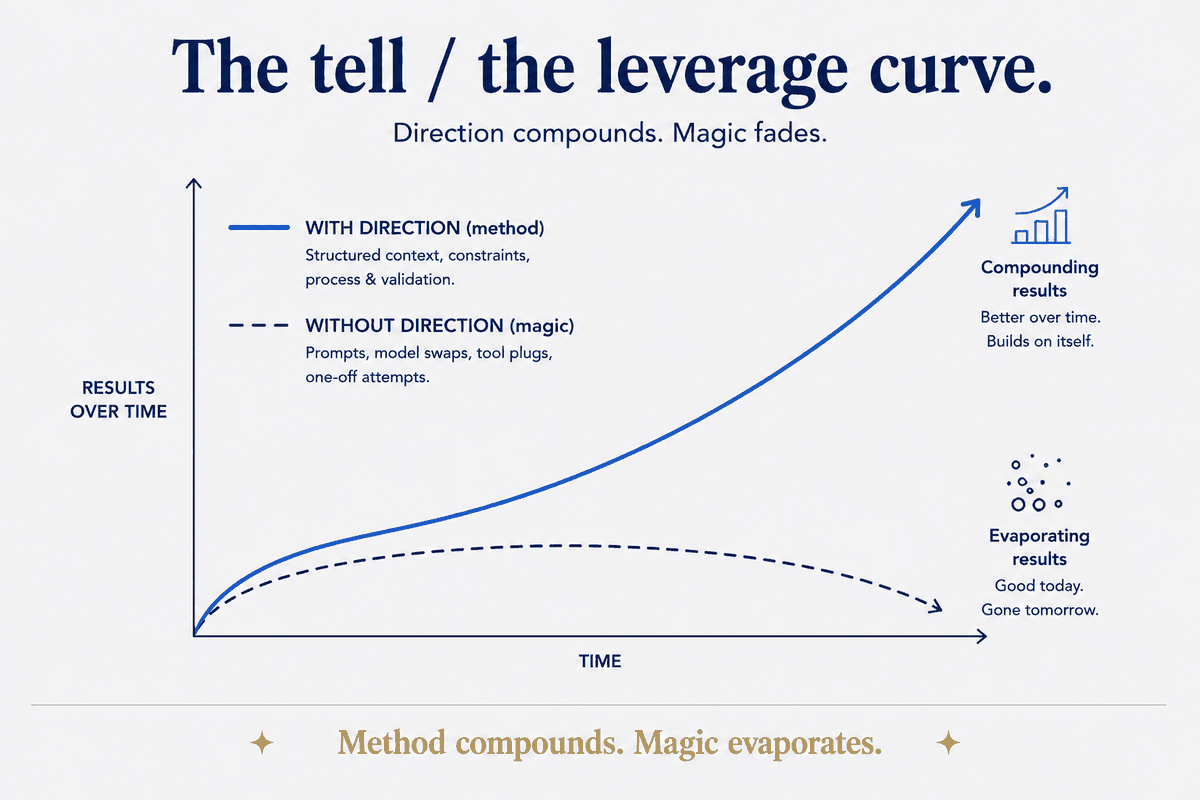
One bonus, because it'll save you a hundred future infographics: the genre is full of things that don't survive scrutiny. Specific model names (stale in months). Time-and-outcome claims ("two hours a day," "any skill in thirty days," "replace a whole team"). Tool plugs dressed up as principles. Pure count-listicles.
The keepers are always the method — the boring, durable, "set up the system first" stuff. The filler is always the magic — the screenshot of one impressive output, the number in the headline. Once you can tell them apart, you can read the whole genre in about a minute and keep the two ideas worth keeping.
The actual point
You don't need 120 tips. You need a structure your AI can stand on — a file that says who you are, a place that remembers, your notes within reach, your voice and your no-list written down, and the discipline to capture what you learn. Everything else is decoration.
The creators selling "clone yourself with AI" aren't wrong. They're just describing the first room of a house you can actually build. Stop prompting. Start directing. The magic was never the model — it's the structure you give it.