The prompt library you never open and the hacks you screenshot but never run are consumption in a productivity costume — only applied structure counts.
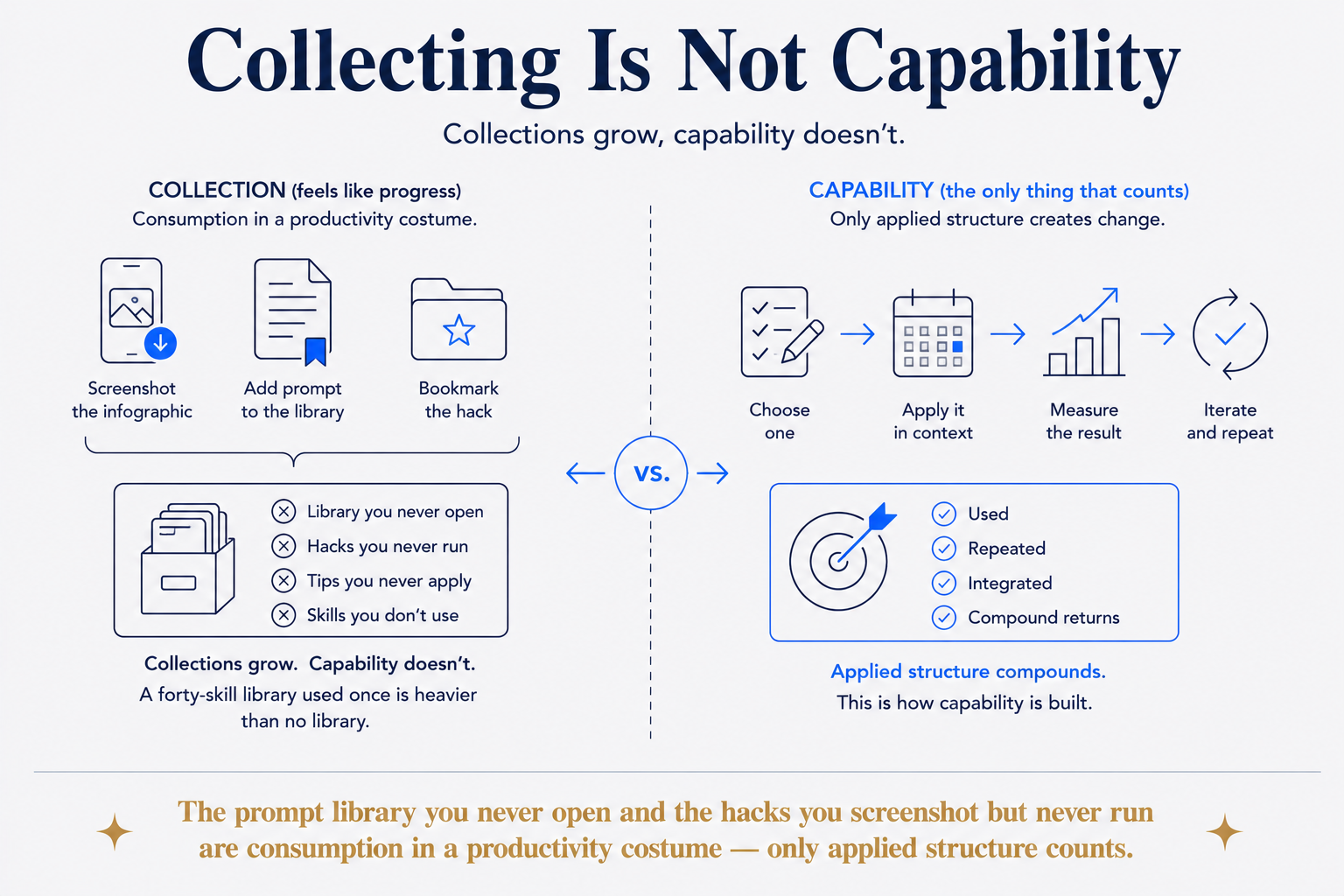
The AI-tips economy runs on a comfortable illusion: saving the infographic feels like acquiring the skill. The screenshot lands in the vault, the prompt joins the library, the bookmark folder swells — and the feeling of progress is real even though nothing changed. Collections grow; capability doesn't. A forty-skill library used once is heavier than no library, because now it also has to be searched, doubted, and maintained.
The uncomfortable line comes from inside the tips economy itself: delete the infographics you collect and try the thing instead. The trap it names isn't reading too much — it's that collecting substitutes for doing while feeling like preparation for it. Every saved-for-later is a small promissory note, and a vault full of promissory notes is a debt, not an asset.
The escape isn't to stop reading; it's to make application the admission fee. A saved idea earns its place by being run — on your own work, this week — then critiqued and either adopted into the standing structure or deleted. That's curation with a metabolism: input comes in, gets digested into a rule, a skill, a changed habit, or gets excreted. What never gets to happen is the third state, the pile — saved, unused, still counting as progress.
The honest coda: this concept was itself mined from a 245-file collection of exactly such infographics. Which is the point, not the contradiction — a collection defends its existence only by ending in applied distillation. The 245 files earned their disk space the day they became a handful of named, adopted concepts; until then they were consumption wearing a research costume.