Without structure AI is a toy; with structure it becomes an instrument.
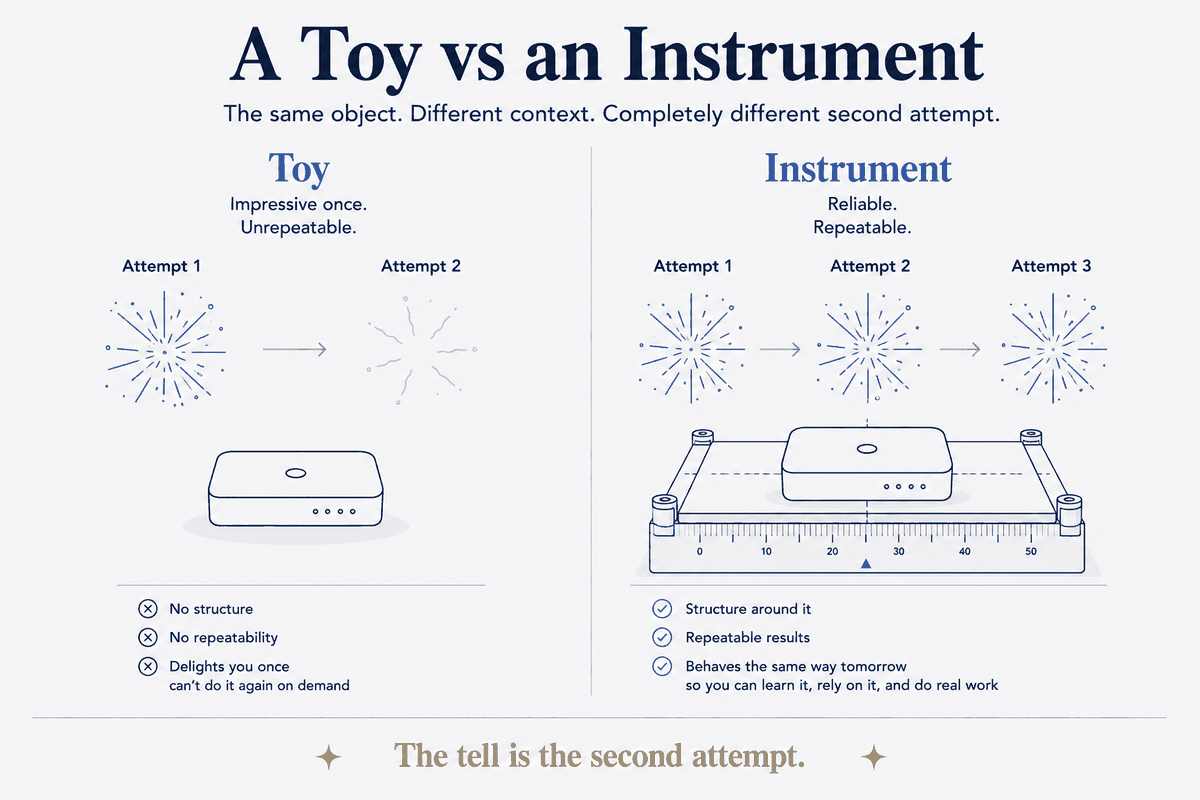
Without structure, AI is a toy: impressive once, unreliable twice. With structure it becomes an instrument you can rely on.
The tell is the second attempt. A toy delights you once — a demo that lands, a paragraph that surprises — and then can't do it again on demand, because nothing about the first success was reproducible. That's not a small flaw. Anything you can't repeat, you can't build on; and anything you can't build on stays a party trick no matter how impressive the trick.
An instrument earns a different trust. It behaves the same way tomorrow, so you can learn it, rely on it, and put real work through it. What separates the two isn't the model's cleverness — it's whether there's structure around it: context it can read, rules it must obey, a way to check its output. Give it those and the same model becomes something you can point at work that matters.
The word for what an instrument has is deterministic: the same input produces the same result, on the second try and the fiftieth. It sits next to deliberate but on a different axis — deliberate is whether you chose the structure, deterministic is whether the output repeats. A toy can even be deliberate (someone framed the demo) and still fail the only test that counts: doing it again. Structure is what buys the second property from the first — you choose the shape on purpose so the behaviour stops being a surprise.
The distinction cuts through most AI discourse. Demos show toys; the interesting question is always what happens on the fiftieth use, on an ordinary Tuesday, when nobody's watching.