Every knowledge product answers two questions: who maintains it, and is it a layer of its own or a feature of something else. The answers decide what you can build on.
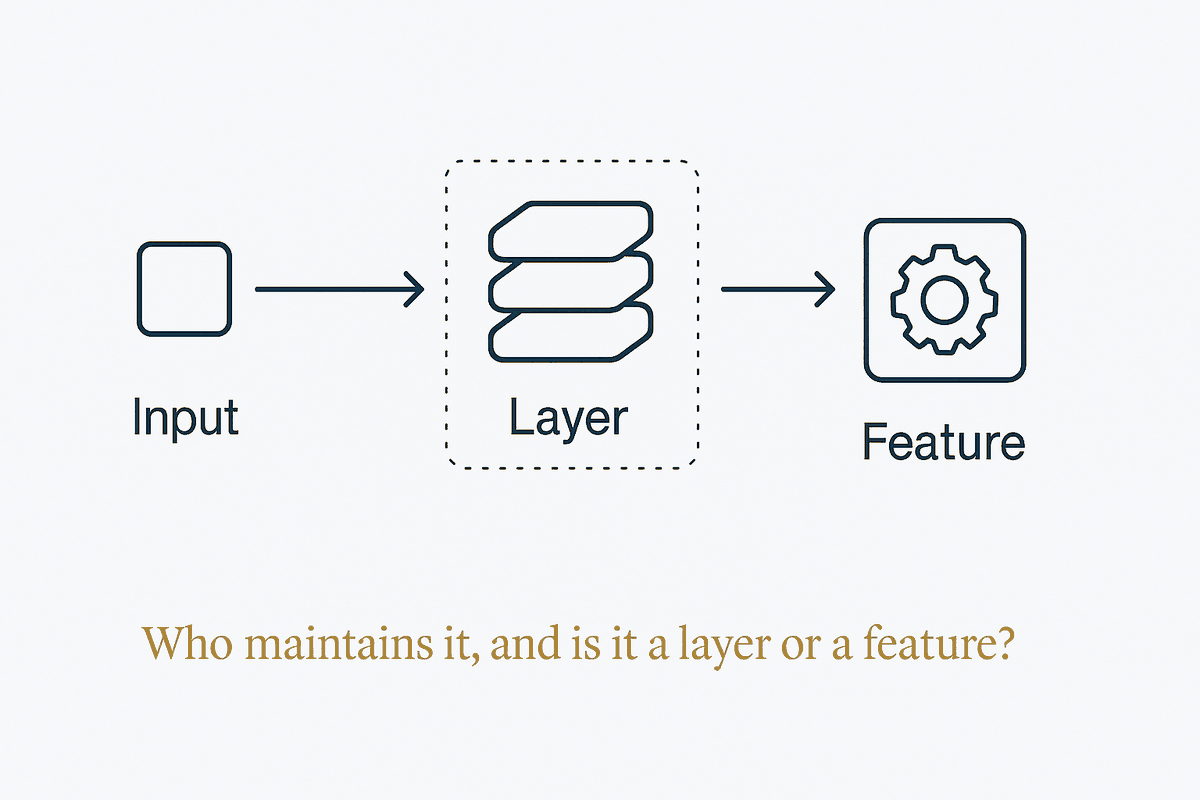
The market for organisational knowledge splits cleanly on two axes, and almost every disappointment traces to not having asked them. First: who does the upkeep — you, or a vendor? Second: is the knowledge its own layer, or a feature inside a suite you already run? Four families fall out, and they are not competing versions of the same thing.
A dedicated product is someone else's layer: they connect your sources, own the architecture, and hand you answers. Fast to value, and the meaning of your business now lives in their model. Self-hosted is your own layer: full control over modality, routing and cost, paid for with your engineering team owning accuracy and maintenance forever. Memory SDKs give developers blocks to add memory to the product they are building — but that memory stays bound to that product's users and sessions, and never becomes shared organisational context. Bundled incumbents add a brain-like layer to a suite you already use; easy to switch on, and designed to make that suite smarter rather than to span your stack.
The last two are where expectations break, because both look like a company brain from the outside. A memory SDK produces per-product recall, not shared meaning. A bundled feature produces a smarter suite, not an independent knowledge layer — and the moment the question crosses a tool boundary, it stops answering.
None of the four is wrong; choosing without naming the trade is. A personal system built on your own files sits squarely in self-hosted: nothing is rented, the structure is yours, and the price is that maintenance is yours too. Saying that out loud is what makes it a decision rather than a default.