What it is
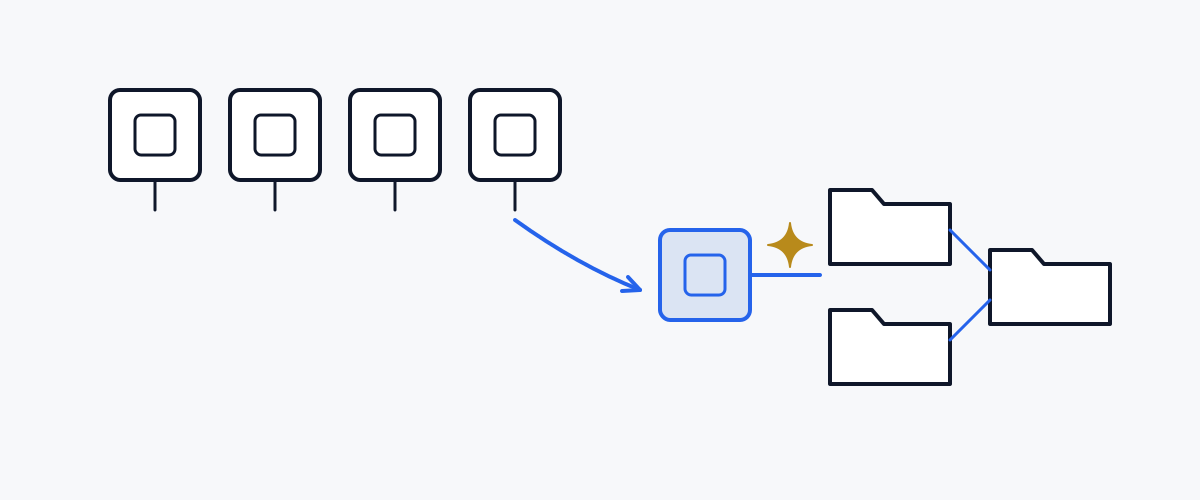
AI is the reasoning layer: the model that reads, writes, summarises and proposes. It is the same for you as for your neighbour or your competitor. A new model comes out every few months, and the old advantage disappears with it.
Why it matters
If the model is the same for everyone, the difference has to come from somewhere else. It comes from the context the model gets and from the checks on what it produces. In my experience, a model pointed at a well-structured vault, with clear instructions and rules, gives better answers than a stronger model pointed at a pile.
Owning the structure keeps you free. When the structure is yours and in plain files, you can switch to a better or cheaper model without rebuilding anything.
What it looks like
At home. I use an AI assistant that works directly in my vault. It reads an instruction file at the root, follows the folder conventions and uses small skills for repeated jobs. I have switched models more than once; the vault stayed as it was.
At work. The same approach means investing in the data model, the metadata and the governance around AI, and treating the model itself as a replaceable supplier.
The usual mistake
The common reflex is to shop for the best model. A better prompt or a newer model gives a short bump. A better structure lifts every answer from then on.
Where it stops
Some jobs do need the stronger model: long reasoning, hard code, subtle writing. Structure narrows the gap; it does not close it for every task.