What it is
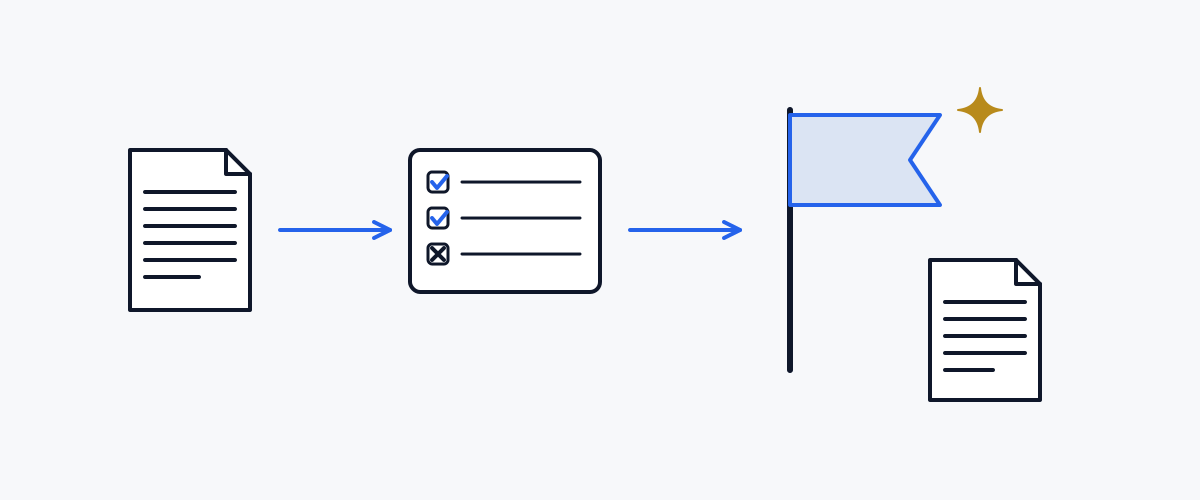
A rule is a check that runs the same way every time: this field must be a date, this person must exist in the people list, this page may not go live without an image. Some rules guide the AI while it works. Others check its output afterwards and flag what does not fit, instead of letting a guess through.
Why it matters
An AI error looks exactly like a correct answer. It has no tell. The only defence is a check against something you already know: the source record, the agreed vocabulary, the expected shape. Without rules you are trusting a confident voice. With rules you can show why an answer is right, or see at once that it is not. When a result is questioned, you can point at the rule that produced or passed it.
What it looks like
At home. The build of this site has gates: one stops a page that links to an article that does not exist yet, one stops an image that is missing, one stops an article that still contains working notes. Hooks in my AI setup run checks automatically instead of hoping the model remembers them.
At work. The same thing is data-quality rules and validation in a data platform, and evaluations that must pass before an AI feature is released.
The usual mistake
A rule written as a wish does not hold. "Format it properly" is a hope; "dates as YYYY-MM-DD" is a rule a machine can check. If you cannot verify a rule, it will not be followed reliably.
Where it stops
Rules only check what you thought of. An error of a new kind passes every check, which is why a person still reads the output that matters.