What it is
Data here means the records of your own life or your own organisation: photos, health measurements, books read, trips taken, invoices, agreements. Owned means they live in a place and a format you control. Readable means a script, a query or an AI can open them without asking a vendor first.
Why it matters
Most services let you look at your data but not ask questions of it. A wearable shows a graph of your sleep; it will not let you put your sleep next to your travel calendar. Once the records are yours and readable, those questions become a query.
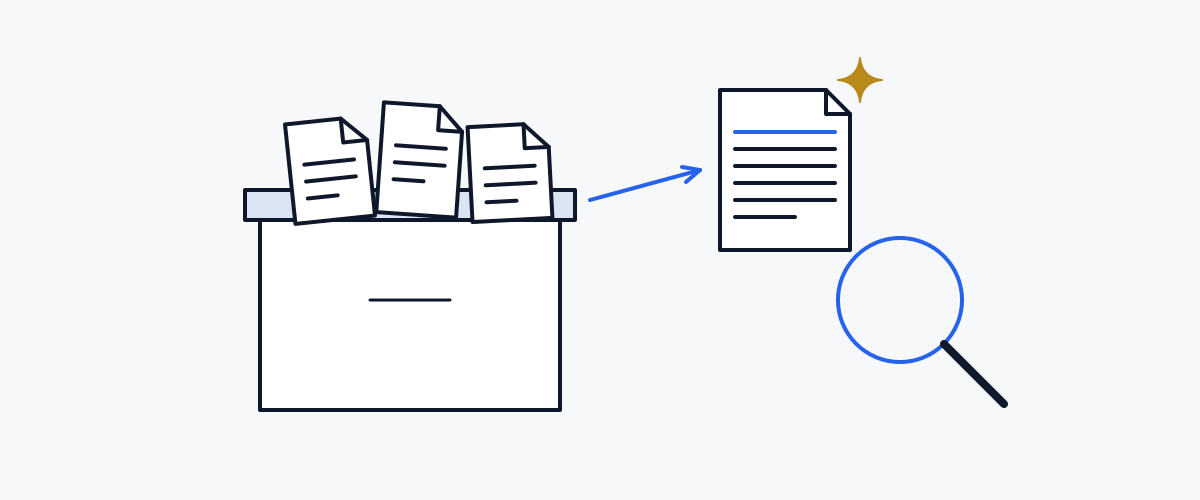
Readability changes what an archive is. A folder of exports is dead weight until something reads it. The moment it can be queried, it becomes a source.
What it looks like
At home. Health data from my Amazfit watch, my reading history and 271 books, my photo library: each lands as files I own, and each is loaded into a local database that I can query and join with the others.
At work. The same principle is data ownership in a platform: the organisation keeps its records in its own warehouse, not only inside the tools that created them, so it can combine them across systems.
The usual mistake
Saving everything feels productive, but an unread archive answers nothing. Pick the questions you want answered, and make the data for those questions readable first.
Where it stops
Owning your data means you do the backups, the exports and the format changes yourself. That work is real, so start with the data you will actually query.